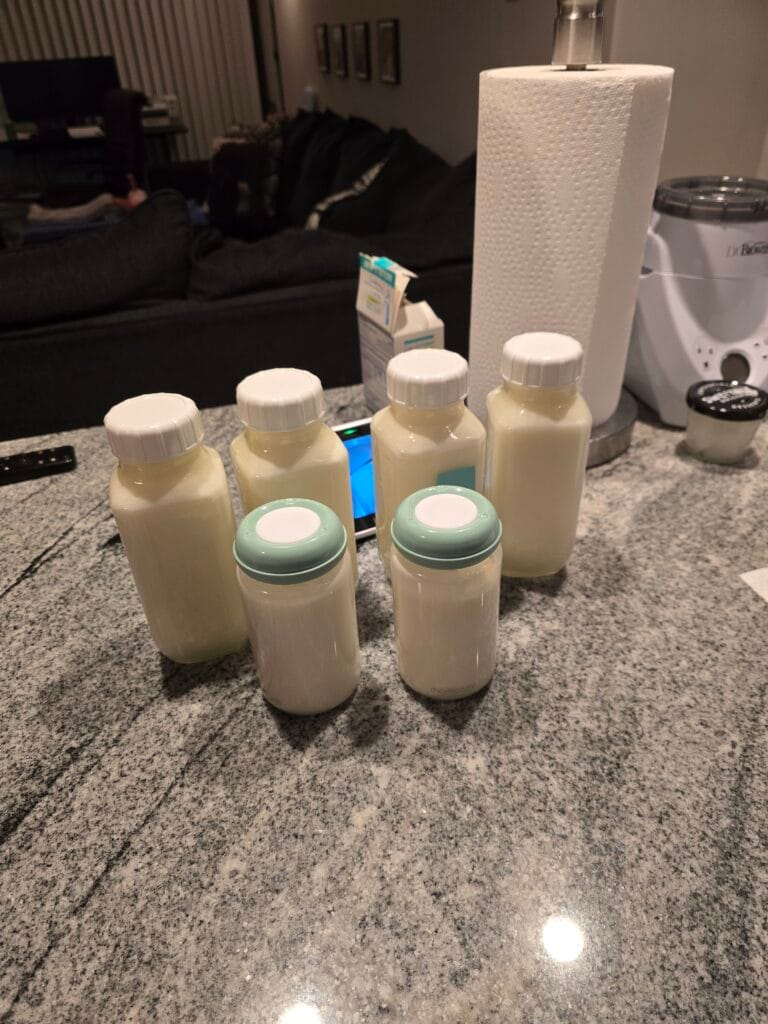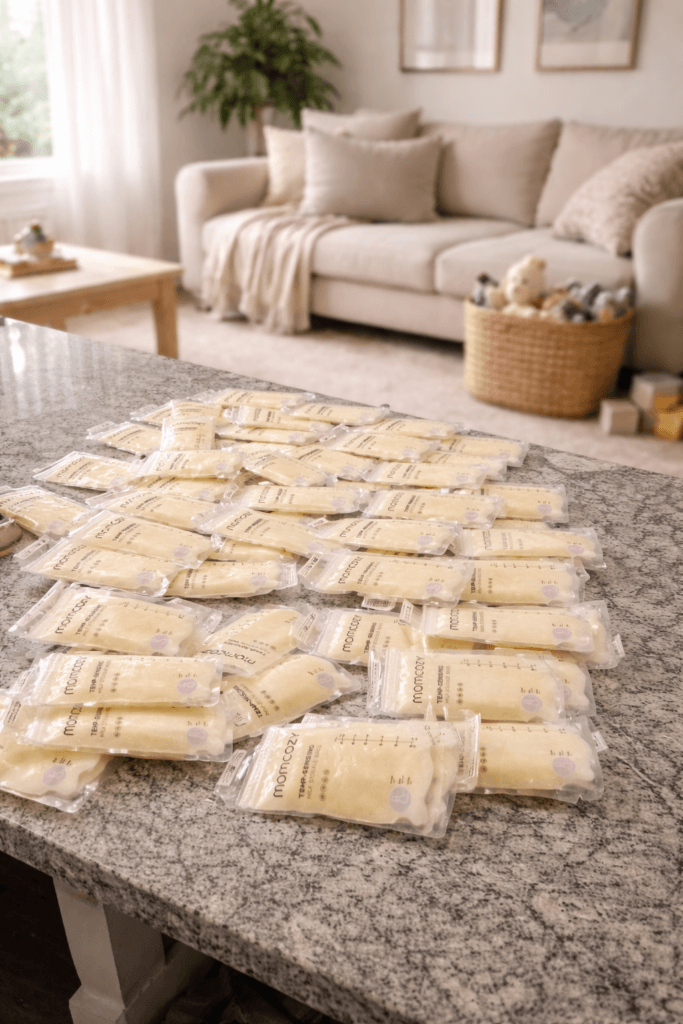
If you pump several times a day, finding a primary breast pump you can actually rely on makes a huge difference. That’s exactly what caught my attention about the new BabyBuddha 3.0. BabyBuddha designed it as a portable primary pump for moms who want the freedom to move without giving up the features they depend on for regular pumping sessions.
I learned how important that balance can be while exclusively pumping. I’ve used traditional pumps, portable pumps, and wearables throughout my pumping journey, and eventually, the BabyBuddha 2.0 replaced my Spectra as my primary pump. I bought my BabyBuddha myself, used it multiple times a day, and found myself reaching for it more than anything else.
One of the biggest reasons was portability. I could wear the small motor around my neck instead of sitting next to an outlet every time I needed to pump, but I could still use the traditional flange setup that worked well for me. You can read my Baby Buddha 2.0 review if you want my full experience with that model, including the settings I used and how it worked for me as an exclusive pumper.
Now, the BabyBuddha 3.0 breast pump builds on that same idea with a new expression mode, more adjustable settings, and a completely updated flange-sizing system. Those changes sound good on paper, but as someone who knows what it’s like to depend on a pump all day, I’m much more interested in whether they solve the problems frequent pumpers actually deal with.
This post is sponsored by BabyBuddha and contains affiliate links. I may earn a commission if you purchase through my links at no additional cost to you.
So, is the BabyBuddha 3.0 a good primary breast pump? Let’s look at what changed, how it compares with the BabyBuddha 2.0, and which upgrades may actually matter if you pump frequently or exclusively.
What Is a Primary Breast Pump?
Before getting into the BabyBuddha 3.0, we need to clear up what a “primary pump” actually means. I think the terms primary, portable, and wearable get thrown around so much that they can start sounding interchangeable, even though they describe very different things.
Your primary breast pump is the pump you rely on for most of your pumping sessions. If you exclusively pump, you might use that pump five, six, seven, or even more times a day depending on where you are in your pumping journey. You need it to remove milk effectively, fit comfortably, give you enough control over your sessions, and handle frequent use.
A secondary pump usually fills in when convenience matters most. Maybe you use a wearable while working, running errands, traveling, or dealing with one of those days when pulling out your normal pumping setup feels like one task too many. That doesn’t make wearable breast pumps bad or less useful. I’ve used them too, and they absolutely have their place.
The important difference is that portable doesn’t automatically mean wearable, and wearable doesn’t automatically mean primary.
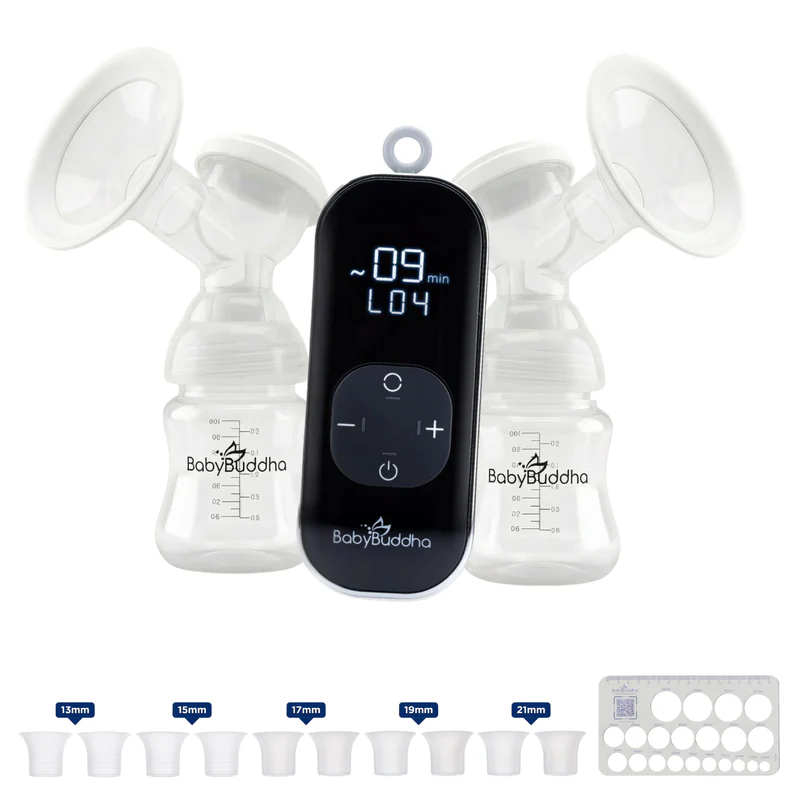
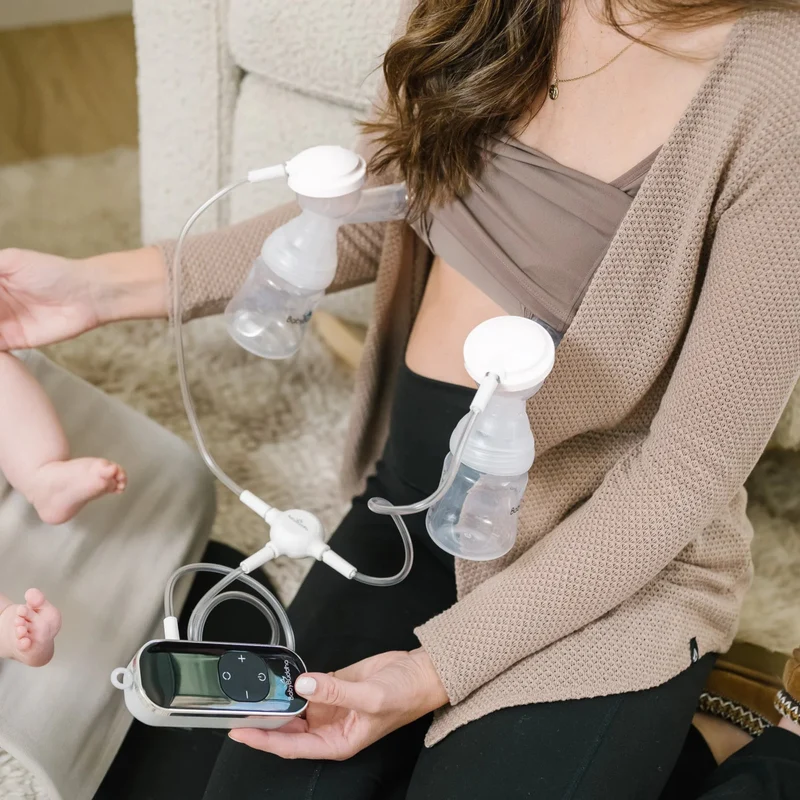
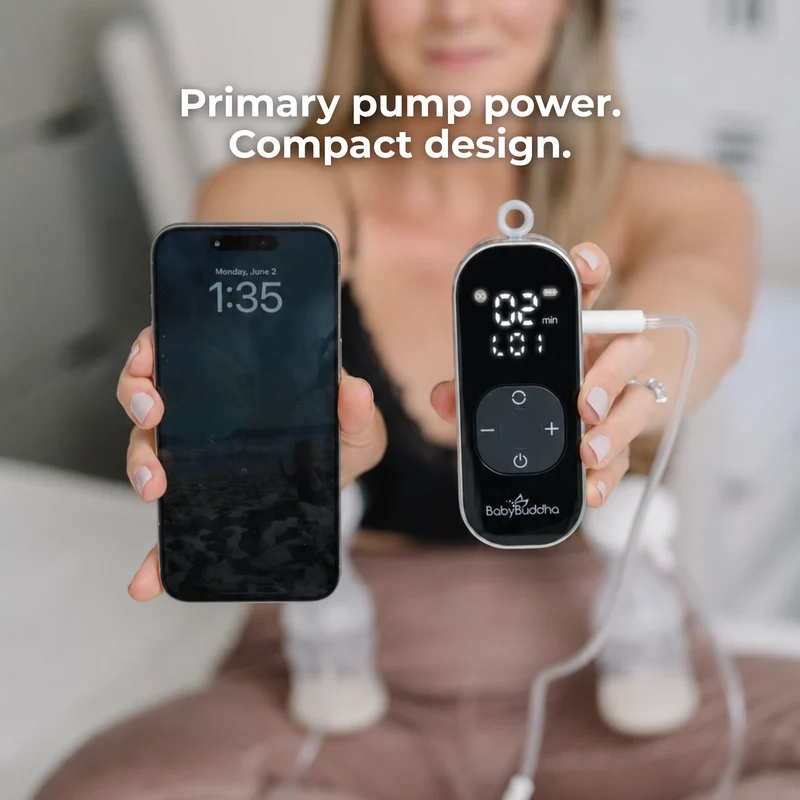
The BabyBuddha 3.0 falls somewhere between a traditional tabletop pump and a fully wearable breast pump. It uses a small rechargeable external motor that connects to traditional flanges and bottles through tubing. You can wear the motor around your neck with the included lanyard, which gives you the freedom to move around without putting the entire pumping system inside your bra.
BabyBuddha designed the 3.0 specifically as its primary portable breast pump, while the company offers its fully in-bra wearable pump as a secondary option. For moms who pump frequently, I think that difference matters because portability doesn’t help much if you don’t feel comfortable relying on the pump for your regular sessions
What’s New With the BabyBuddha 3.0?
If you’re already familiar with the BabyBuddha 2.0, the 3.0 will look pretty familiar. BabyBuddha didn’t throw out the original concept and start over. Instead, the company kept the small rechargeable motor and portable lanyard design while expanding the settings, pumping rhythms, and flange options.
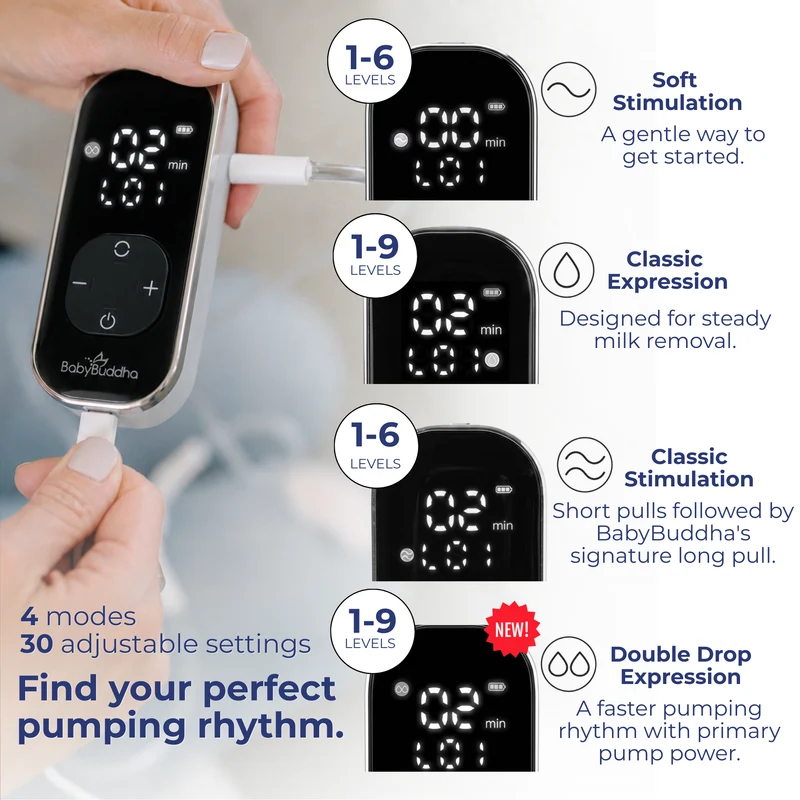
The BabyBuddha 3.0 now offers four pumping modes and 30 adjustable settings. The biggest addition is the new Double Drop Expression Mode, which gives you another expression rhythm instead of simply adding more suction. BabyBuddha also expanded its EasyFit flange system to include a much wider range of sizing options in the box.
Those upgrades make sense to me because they address things that actually matter when you pump several times a day. You need enough control to figure out how your body responds, and you need a flange that actually fits. Neither of those things sounds as exciting as some flashy new feature, but both can make a huge difference in your pumping routine.
If you’re already interested in the new model, you can shop the BabyBuddha 3.0 through my affiliate link and use code EUROPEANMAMA to save 10% on your entire order.
BabyBuddha 2.0 vs. 3.0 and What’s Different
Since I used the BabyBuddha 2.0 as my primary pump, this was naturally the comparison I wanted to see first. The biggest difference isn’t a dramatic jump in BabyBuddha suction strength. Instead, the 3.0 gives you more ways to customize your pumping rhythm and makes flange sizing much easier from the beginning.
| Feature | BabyBuddha 2.0 | BabyBuddha 3.0 |
|---|---|---|
| Pumping modes | 3 | 4 |
| Total settings | 21 | 30 |
| Double Drop Expression | No | Yes |
| Portable lanyard design | Yes | Yes |
| USB-C charging | Yes | Yes |
| Included flange sizing | Narrower range | 24mm flanges + 13, 15, 17, 19 and 21mm inserts |
| Sizing ruler | No | Yes |
For me, this makes the BabyBuddha 2.0 vs. 3.0 comparison much more about flexibility than strength. The 3.0 adds nine settings, another expression rhythm, and a much broader EasyFit sizing kit.
If your main question is what a BabyBuddha actually feels like to use several times a day, you can read my full BabyBuddha 2.0 review. That’s where I share my firsthand experience with my output, pumping routine, settings, flange setup, and daily use.
How Does BabyBuddha Double Drop Mode Work?
The new BabyBuddha 3.0 Double Drop Expression Mode is probably one of the most interesting changes because it isn’t simply another suction level. Instead, it gives you another expression rhythm to try.
BabyBuddha says Double Drop cycles faster than Classic Expression while maintaining the same suction strength at the corresponding level. The rhythm falls between Soft Stimulation and Classic Expression, which gives you another option if your body responds better to a different pumping pattern.
If you’ve pumped for any length of time, you probably understand why that can matter. Finding the right BabyBuddha pump settings isn’t always as simple as increasing the suction until you get more milk. Our bodies respond differently to different rhythms and suction levels, and the setting another mom swears by might do absolutely nothing for you.
I definitely learned that while exclusively pumping. Once I found a rhythm and suction level that worked for my body, I didn’t need to keep turning my pump higher. I needed consistency and a setup that helped me trigger a letdown and empty effectively without making pumping uncomfortable.
That’s what I find interesting about Double Drop. Instead of just giving you more strength, it gives you another rhythm to experiment with.
BabyBuddha 3.0 Settings
The BabyBuddha 3.0 settings include Soft Stimulation with levels 1–6, Classic Expression with levels 1–9, Double Drop Expression with levels 1 – 9, and Classic Stimulation with levels 1 – 6. Altogether, that gives you 30 adjustable BabyBuddha pump settings, compared with 21 on the BabyBuddha 2.0.
I like that BabyBuddha added another rhythm rather than simply focusing on making the pump stronger. More suction doesn’t automatically mean more milk, and pumping shouldn’t hurt just because your pump can reach a higher level. Having more combinations of rhythm and suction gives you more room to figure out what works comfortably for your body.
BabyBuddha Flange Sizes and the EasyFit System
The new Double Drop mode will probably get more attention, but I think the changes to the BabyBuddha flange system deserve just as much discussion. Flange sizing can cause so much unnecessary confusion when you first start pumping, especially when a pump comes with one standard size and nobody explains that it might not actually fit you.
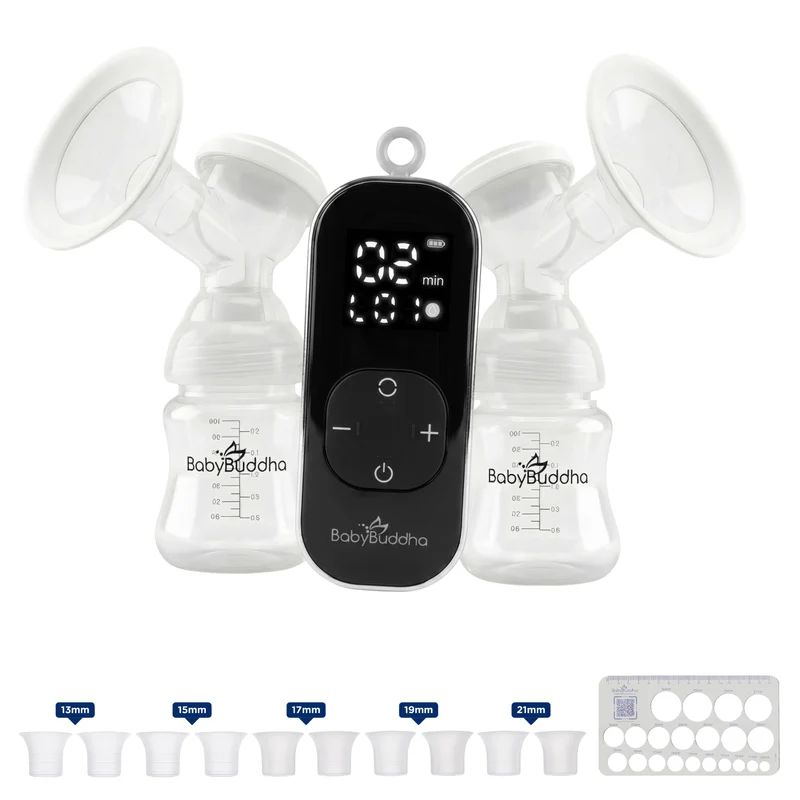
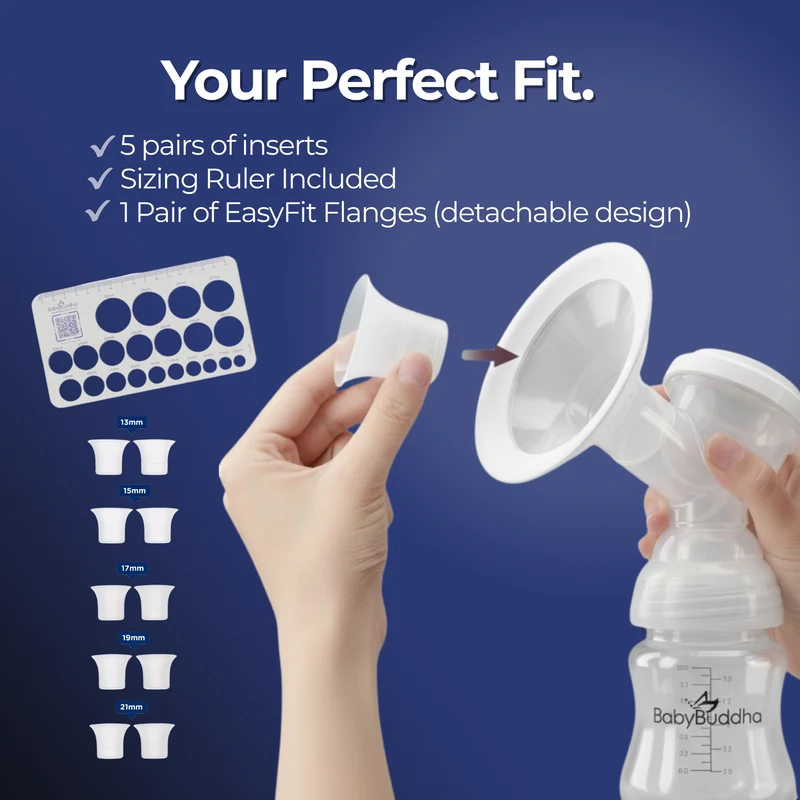
The BabyBuddha 3.0 comes with two 24mm EasyFit flanges plus ten inserts. You get two inserts in each size: 13mm, 15mm, 17mm, 19mm, and 21mm. BabyBuddha also includes a nipple-sizing ruler to help you find a starting point for your fit.
As someone who uses a 21mm insert, I appreciate this change. I remember how much trial and error went into figuring out flange sizing, and it’s one of those pumping topics that seems obvious only after someone finally explains it to you.
Why Your Breast Pump Flange Size Matters
Your breast size doesn’t determine your flange size. You need to look at your nipple measurement and how your nipple moves inside the flange tunnel while you pump. A flange that’s too small can cause rubbing and discomfort, while one that’s too large can pull more tissue into the tunnel than necessary. You may even need a different size on each side.
That’s why I think including several BabyBuddha flange sizes makes the EasyFit system genuinely useful rather than simply giving BabyBuddha another feature to put on the box. You can try the included 13mm, 15mm, 17mm, 19mm, or 21mm inserts without immediately ordering an entire collection of extra parts.
If you’ve ever found yourself online at 2 a.m. trying to determine whether you’re a 17mm or 19mm while simultaneously questioning everything you thought you knew about your own nipples, you understand why I appreciate this. Pumping comes with enough trial and error already.
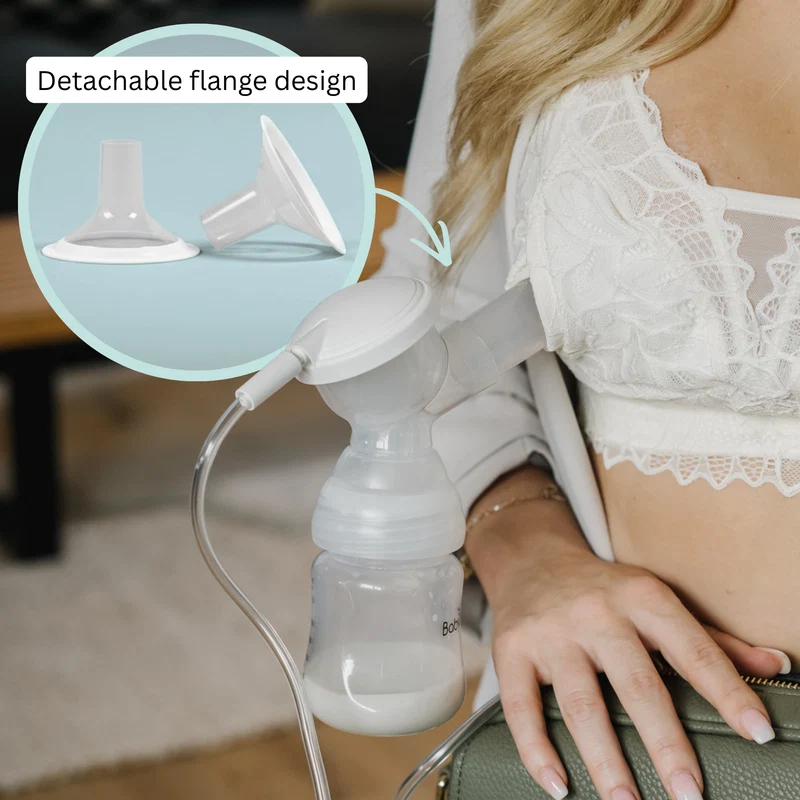
This is where I’d use the detachable-flange image rather than putting both flange graphics together. The first image shows what comes in the kit, while this one supports the explanation of how the flange itself works.
The expanded BabyBuddha flange kit won’t mean that every included size works for every mom, but it gives you far more options to start with than one standard flange size.
Why Portability Matters When You Pump All Day
This is one of those things that’s hard to understand until you’re actually pumping around the clock. A 15-minute pumping session never feels like just 15 minutes once you add in setting everything up, storing the milk, washing your parts, and getting everything ready for the next session. Somehow, by the time you’re finished with all of that, it feels like you’re already watching the clock for the next pump.
And life doesn’t stop while you’re doing it. Your baby still needs you, your other kids need you, dinner still needs to get made, and you still have a million other things going on. That’s one of the biggest reasons portability became so important to me while exclusively pumping.
With my BabyBuddha 2.0, I could put the motor on the lanyard and move around instead of planning every pumping session around an outlet. I pumped around the house, and I pumped in the car. I still had bottles and flanges attached to me, so I wasn’t exactly running a marathon while pumping, but I wasn’t stuck sitting in one spot either.
That freedom sounds like a small convenience until you’re pumping five or six times every day. Then it becomes one of those features you really don’t want to give up.
I even used my BabyBuddha during longer power-pumping sessions because I could sit wherever I wanted without hunting for an outlet. If you’re dealing with a supply dip, I shared the exact power pumping schedule that increased my supply and how I worked it into my regular pumping routine.
The BabyBuddha portable breast pump keeps that same basic advantage with the 3.0. The rechargeable motor remains small enough to wear around your neck with the included lanyard, so you can move through more of your normal routine while pumping.
Primary vs. Secondary Breast Pumps
I don’t think we need to turn the wearable-versus-traditional-pump conversation into another thing moms have to pick sides about. Different pumps solve different problems, and sometimes having a secondary pump makes your life much easier even when you already love your primary one.
Where Wearable Breast Pumps Fit
A wearable breast pump can make a lot of sense when you need discretion or simply don’t want bottles hanging from your chest. Wearables can make work, errands, travel, and pumping around other people much easier. I’ve used wearable pumps too, and I completely understand the appeal.
The problem comes when we assume that convenience automatically makes a pump the best primary option for every mom. Some women respond beautifully to wearables, while others find that they remove milk more effectively with traditional flanges or a different pumping setup. Breast pumps can be surprisingly personal, and what works incredibly well for one mom might not work nearly as well for another.
That’s why I think it helps to separate convenience from the job you actually need your pump to do. A secondary pump can make a difficult pumping situation easier. Your primary breast pump needs to be something you feel comfortable relying on day after day.
Where the BabyBuddha 3.0 Fits
The BabyBuddha 3.0 sits between a traditional wall pump and a fully wearable system. You still use tubing, flanges, and bottles, but the rechargeable motor doesn’t need to stay plugged into an outlet while you pump.
BabyBuddha gives the 3.0 four pumping modes, 30 settings, and adjustable suction while keeping the motor small enough to hang from a lanyard. The company currently lists the BabyBuddha suction strength at 53–315 mmHg.
So, is BabyBuddha a primary pump? BabyBuddha specifically markets the 3.0 as its primary portable breast pump and its separate BabyBuddha wearable pump as a fully in-bra secondary option.
That setup makes sense to me because it’s essentially how I already used my BabyBuddha 2.0. I wanted portability, but I also wanted a pump I felt comfortable reaching for several times every day.
Is the BabyBuddha 3.0 Good for Exclusive Pumping?
If you’re exclusively pumping, this is probably one of the biggest questions you have. I know that when I relied completely on pumping to provide breast milk, I needed much more than a pump that was convenient to take with me.
I needed effective milk removal and enough control over the settings to find something my body responded to. I needed a comfortable flange fit because I wasn’t going to use an uncomfortable setup five or six times a day. I also desperately wanted the freedom to move around because sitting beside a wall pump for every session simply didn’t fit my life.
Those experiences shape what I look for in any breast pump for exclusive pumping now.
The BabyBuddha 3.0 addresses several of those needs with adjustable suction, four pumping modes, 30 settings, multiple flange sizes, a rechargeable battery, and the same portable design that originally made me love my 2.0.
Of course, I can’t tell you that every exclusive pumper will respond to the 3.0 exactly like I responded to my BabyBuddha 2.0. No breast pump can guarantee the same comfort or output for every woman. What I can say is that these upgrades address real issues I experienced during exclusive pumping rather than adding features that sound impressive but don’t change much in everyday life.
Your pump is only one piece of the supply puzzle, too. If that’s something you’re currently working on, I’ve also shared what helped me increase my milk supply while exclusively pumping based on what worked during my own pumping journey.
If you’re researching BabyBuddha 3.0 exclusive pumping because you need a pump you can use several times throughout the day, the 3.0 gives you more ways to customize your sessions than the BabyBuddha model I used as my primary pump.
Should You Upgrade From BabyBuddha 2.0 to 3.0?
If you already own a BabyBuddha 2.0 and it works well for you, I don’t think you automatically need to replace it because BabyBuddha released a newer model. Your 2.0 didn’t suddenly stop working because there’s a 3.0 now. Instead, I would look at the upgrades and decide whether they solve a problem you currently have.
If You Already Love Your BabyBuddha 2.0
If your 2.0 empties you well, you’ve found comfortable BabyBuddha pump settings, and you’ve already figured out your flange size, you may be perfectly happy sticking with it.
The 3.0 becomes more interesting if you want another expression rhythm, more adjustable settings, or easier flange-sizing options. The new Double Drop mode also gives you something genuinely different to try rather than simply adding more levels to an existing mode.
For me, that’s the important distinction in the BabyBuddha 2.0 vs. 3.0 conversation. The 3.0 isn’t simply “the stronger one.” The upgrades focus much more on rhythm, customization, and fit.
If You’re Buying Your First BabyBuddha
If you’re buying your first BabyBuddha, the decision looks different. You’re starting fresh, so you don’t have to decide whether the new features justify replacing a pump you already own and love.
The 3.0 gives you BabyBuddha’s current primary portable model with Double Drop, 30 adjustable settings, and the expanded EasyFit system from the beginning. Having multiple inserts in the box may also save you from buying several different sizes while you figure out your fit.
If you want to try it, shop BabyBuddha and use code EUROPEANMAMA to save 10% on your entire order.
Who Is the BabyBuddha 3.0 Best For?
I would put the BabyBuddha 3.0 on your list if you want a portable primary breast pump rather than something you only plan to use occasionally. It makes the most sense for moms who pump frequently, exclusively pump, want to move around during pumping sessions, or want more control over their pumping rhythms and flange fit.
I also think the 3.0 makes sense for someone who likes the freedom of a portable pump but doesn’t necessarily want a fully wearable system as her main pump. You still have bottles, flanges, and tubing, so it isn’t completely discreet. In exchange, you get a setup that BabyBuddha specifically designed for regular primary-pump use.
If your number-one priority is putting the entire pump inside your bra, however, the 3.0 probably isn’t the format you’re looking for. A fully wearable pump would better match that specific need.
The right choice comes down to what you need your pump to do most often, not which type of pump happens to be trending.
Is the BabyBuddha 3.0 a Good Primary Breast Pump?
After exclusively pumping and using the BabyBuddha 2.0 as my primary pump, I know what matters to me much more than I did at the beginning of my pumping journey. I want a pump that fits into my life instead of forcing my life to revolve around pumping.
That’s what originally made BabyBuddha work so well for me. I got the portability I wanted without giving up the traditional pumping setup that worked for my body.
The BabyBuddha 3.0 keeps that basic idea and improves some of the areas that can cause the most frustration. Double Drop gives you another expression rhythm, the 3.0 BabyBuddha 3.0 settings give you more room to customize your sessions, and the expanded BabyBuddha flange kit gives you five insert sizes before you start buying extra parts.
I also like that BabyBuddha didn’t simply turn its primary pump into another fully wearable pump. Wearables already have a place in the pumping world. The 3.0 fills a different need: a small, rechargeable primary breast pump that gives you the freedom to move.
For a mom who pumps frequently or exclusively, that’s what makes the BabyBuddha 3.0 interesting to me. I already know how much of a difference that combination of portability and pumping power made in my routine with the 2.0, and the 3.0 expands on that concept with more control over rhythm and fit.
BabyBuddha 3.0 FAQ
Yes. BabyBuddha designed the 3.0 as its primary portable breast pump. It combines a small rechargeable external motor with traditional flanges and bottles, giving you portability without switching to a fully in-bra pumping system.
BabyBuddha designed the 3.0 for regular primary-pump use. It offers four modes, 30 adjustable settings, multiple flange sizes, and adjustable suction. Every body responds differently to pumping, though, so comfort and milk output can vary from person to person.
The BabyBuddha 3.0 is portable, but it isn’t a fully wearable breast pump. You can wear the small motor around your neck with the included lanyard while tubing connects it to the flanges. BabyBuddha sells a separate fully in-bra wearable pump.
The BabyBuddha 3.0 includes two 24mm EasyFit flanges plus inserts in 13mm, 15mm, 17mm, 19mm, and 21mm. You receive two of each insert size along with a nipple-sizing ruler.
Double Drop Expression Mode adds another expression rhythm to the BabyBuddha 3.0. It cycles faster than Classic Expression at the same corresponding suction strength, giving you another pumping pattern to try.
The BabyBuddha 3.0 increases the number of pumping modes from three to four and expands the total settings from 21 to 30. It also adds Double Drop Expression Mode and a broader EasyFit system with 13mm, 15mm, 17mm, 19mm, and 21mm inserts.
BabyBuddha currently lists the BabyBuddha 3.0 suction strength at 53–315 mmHg. You don’t need to use the highest suction level to get a good pumping session, though. A comfortable setting that helps your body respond matters more than simply turning the suction as high as possible.
Yes. The EasyFit kit includes two 24mm flanges and ten inserts, with two each in 13mm, 15mm, 17mm, 19mm, and 21mm. That gives you several sizing options without immediately purchasing separate inserts.